

Aravind Haripriya, MD, and Rengaraj Venkatesh, MD, selected as 2026 Chang-Crandall Humanitarian Award recipients
The ASCRS Foundation Board proudly announces its selection of Aravind Haripriya, MD, and Rengaraj Venkatesh, MD, for the 2026 Chang-Crandall Humanitarian Award.
Endowed by a generous gift from David and Victoria Chang, the ASCRS Foundation Chang-Crandall Humanitarian Award was established in 2017 to honor and recognize outstanding humanitarian work in the field of cataract blindness and disability. The $100,000 award is donated to the awardee’s non-profit organization of choice. Drs. Haripriya and Venkatesh have earmarked the financial prize for the Aravind Eye Care System.
Getting into ophthalmology and the Aravind Eye Care System
Both Dr. Haripriya and Dr. Venkatesh have long, accomplished careers in ophthalmology and work within the Aravind Eye Care System.
Dr. Haripriya first joined the Aravind system in pediatric ophthalmology, after completing her residency there. “I did like it, and then Dr. G. Natchiar suggested I join the adult cataract and IOL department.” Working at a large-volume hospital/department, Dr. Haripriya said it has been interesting to look at ways to make things better for patients and to work with a large team.
Dr. Venkatesh completed his residency in 1997 and became a consultant/medical officer in the general cataract unit under the guidance and mentorship of Dr. Natchiar. He also worked in outreach activities doing high-volume cataract surgery, especially manual small incision cataract surgery (MSICS). It was not just volume, but focused on quality and training people in MSICS, especially young residents.
Around 2000 or 2001 when Aravind planned a new expansion to Pondicherry, Dr. Venkatesh had the opportunity to choose a specialization in addition to cataract, and he chose a 1-year glaucoma fellowship. “I did a fellowship in Madurai,” he said, “and then in 2003, when the new hospital was inaugurated, I moved, and it's been 23 years now in Pondicherry.”
Charitable surgery and the Aravind model
In the Aravind Eye Care System, Dr. Haripriya said, about 60% of the work done is either free (camps) or is steeply subsidized, where the patients pay about $12 for a cataract surgery. The rest (40%) would pay for their care.
Dr. Haripriya noted that Aravind was started by Dr. Govindappa Venkataswamy in 1976 and is celebrating its 50th Golden Jubilee year in 2026. “The founder started the hospital after his tenure at the government hospital,” she said. “During his time with the public service, he did a lot of camps, so the first person who introduced camps in the country was Dr. Venkataswamy.”
But it’s not just about the surgeries, she said, it’s also about sharing best practices with the rest of the world. Another arm is manufacturing low-cost, high-quality products, she said, in the Aurolab.
Dr. Haripriya noted that Aravind has made changes over the years. Around the 1990s, she said they started to realize that outreach camps were not permanent facilities and could only reach about 8–9% of the patients who needed eyecare. That's when the concept of having a vision center, a permanent center in these small villages and towns manned by two technicians, came into place. Every patient who visits the center is also seen by an ophthalmologist through a telemedicine viewing facility.
“We find that, through this model, about 90% of the patients are able to receive their eyecare at their site itself. They need not travel to the large hospitals, large centers,” she said. “Only 10% are referred if they need any specialty diagnosis, surgery, or other procedures. We have more than 120 vision centers today, and that is, again, a very useful model.” Dr. Haripriya added this is also a reason why the number of camps conducted and number of patients who come through the camps is also reducing.
Dr. Venkatesh added that outreach has been an integral part for bringing in patients. While there aren’t as many people coming from outreach, Dr. Venkatesh said the Aravind Eye Care System still does a significant number of camps, especially in very rural areas where accessibility is difficult. “Now, it's all a hospital-based approach where you do screening at the campsite, bus the patients to the base hospital, operate, and [take] them back again to the community, and then you go back after a month to follow those patients,” he said.
International outreach
Dr. Venkatesh noted LAICO’s (the Lions Aravind Institute of Community Ophthalmology) role; focusing on how other hospitals across the developing world can do similar work to Aravind has been significant. He said sharing Aravind’s best practices, the systems, software, spreadsheets, and offering training programs to develop their team has enabled this process. This helps other hospitals so they don’t have to depend solely on their NGOs for support, and they can generate demand, do quality work, and also be self-reliant.
Dr. Venkatesh and Dr. Haripriya have both been involved in this type of training and visiting different hospitals sharing this knowledge. “We go there, do a visit to understand their local needs and their local facilities, and we bring them as a team here to one of our facilities, mostly at Madurai,” he said. “The team usually comprises of the hospital administrator, the doctor, the paramedic staff in charge, and other key people. They come as a small team. We work with them for almost a week or two here. We show them how we work, we show them a small satellite center, we show vision centers, and we also sit with them and do a planning for the next 3–5 years, mainly on these three areas—demand generation, quality work, and becoming self-reliable.” Then, they are able to go back and start utilizing what they have learned, he said.
Dr. Venkatesh has been involved in several projects in Kenya, Malawi, Congo, and has recently been working with the Cure Blindness team at Cape Coast in Ghana with Geoff Tabin, MD, and a few other colleagues, setting up an eye hospital inside the Cape Coast general hospital, and separately setting up an eye department. Dr. Venkatesh shared a memorable experience from his first trip to Cambodia in 1999. An operating room staff member’s mother was blind due to posterior capsule opacification from ECCE surgery. There was no access to Nd:YAG laser those days at Cambodia, but having done Nd:YAG capsulotomy in India and knowing its benefits, Dr. Venkatesh performed a surgical capsulotomy and restored her vision. Before he left Siem Reap, she sought him out and offered her blessing, which was an incredibly touching and heartwarming moment, he said.
The founder of Aravind believed that you have to develop the local talent, Dr. Venkatesh said. “You have to develop the local people to take care of their own problems,” he said. “You'll have to work with those hospitals that are already existing, or the new hospitals that are coming up with the support of NGOs.” You train your next-door competitor also because your overall mission is to eradicate needless blindness, he said.
Since the early 2000s, Dr. Haripriya and Dr. Venkatesh and others have been regularly attending international conferences. Over the last 2 decades, we have been leading courses at the ASCRS Annual Meeting quite regularly, Dr. Haripriya said, and at various other conferences. We share new techniques and updates, but also focus on MSICS because we find this technique is widely applicable, especially in the developing world, where the cataracts are advanced, and it's difficult to have access to phaco technology and the newer lenses, she said. “I think this technique is very useful, even for those practicing in the U.S. We do work with a couple of residency programs in the U.S., and some of the residents who come to train with us spend about 3 weeks, primarily learning how to do the MSICS technique,” she said. “They learn how to do MSICS because they're interested in global ophthalmology and will also be able to apply it to the dense nuclear cataracts in their own practice.”
Sustainability
Working within the Aravind Eye Care System, both Dr. Venkatesh and Dr. Haripriya are engaged with looking for ways to promote sustainability and resource consciousness.
Aravind was always centered around the patients, Dr. Venkatesh said. “Whatever we did, we were centered around patients—like closing the loop on the same day, running vision centers, doing outreach, and bussing the patients for surgery—and people started realizing that, by doing this, you are also environmentally friendly because while you are friendly to the patient, you are also friendly to the planet.”
“Cassandra Thiel, PhD, a Fulbright fellow, and I did a study in 2017 to look at cataract waste at Aravind versus the cataract waste at three centers in U.S. We found our waste was almost 1/10 or 1/20 when compared to those centers,” he said. After this, Dr. Venkatesh took note, and he began to look more at how to safely and continuously reuse some of these products, while not compromising quality.
He also noted the involvement of Dr. Chang on the topic of sustainability and the creation of EyeSustain—a global coalition of eye societies, organizations, and ophthalmologists collaborating to make ophthalmic care and surgery more sustainable. Dr. Venkatesh noted that he is also an Advisory Board member of EyeSustain.
Dr. Haripriya and Dr. Chang have published about phaco cassettes and how they can be continuously reused safely, potentially in other areas of the world (not just India).
Dr. Haripriya noted the importance of building evidence for a strong foundation to be able to influence the regulations because the main problem in some of the countries are the tight regulations that do not permit you to reuse certain products and devices. “All of this is possible once you have a good structure and system in place,” she said. She has been involved in developing an in-house database of patient outcomes, the Aravind Cataract Registry, where every cataract surgery patient’s data—including demographics, risk factors, surgical technique, complications, and outcome—is captured.
Seeing big data from a system with as high volume as Aravind provides very useful information, Dr. Venkatesh said. “We are getting very meaningful information, which we are now sharing with the global audience with evidence.” He noted data on the safety and efficacy of using intracameral moxifloxacin, now in more than 3 million eyes, has given confidence to many surgeons around the world to use it.
Patient impact
Both Dr. Haripriya and Dr. Venkatesh said there have been many lasting memories and impact of their work over the years, noting that it’s hard to call out any one instance because there have been so many grateful patients and rewarding experiences.
Dr. Haripriya noted one satisfying experience when she was working as a consultant and was able to help patients who came for cataract surgery at a leprosy rehabilitation center. “It was amazing to see that they actually had an entire center, and they still had some people who had been affected from leprosy, and thoroughly needy patients, because they had nowhere to go,” she said. “This specific camp, we had about 600 patients who came for surgery.”
Similarly, Dr. Venkatesh noted that it’s hard to pick just one experience, as the process of helping patients in the camps, vision centers, and all parts of the Aravind Eye Care System is extremely gratifying. He did mention one surprise encounter that he had many years after performing a cataract procedure. The surgeon does not usually meet the patient prior to surgery, he said, with the preop assessment and other parts of the procedure being done by others. However, a patient recognized Dr. Venkatesh as his cataract surgeon by the sound of his voice 15 years later, remembering the procedure fondly and requesting that he perform surgery on his second eye.
Being chosen for the award
Both Dr. Haripriya and Dr. Venkatesh were surprised and grateful to receive this year’s Chang-Crandall Humanitarian Award.
“This was a complete surprise, and the last thing I expected,” Dr. Haripriya said. “It was really special for both of us. Because this is also Aravind's Golden Jubilee year, I think it means a lot for us to be recipients because we are representing the larger Aravind family, and this means so much to everyone here, especially because now we have a large team of doctors from Aravind visiting the ASCRS [Annual Meeting] every year. Considering all the previous awardees, we're truly honored.”
“We truly believe that this award is for the Aravind Eye Care System,” Dr. Venkatesh said. There are so many things to be done at Aravind, he added, but he said the award will be utilized for the best possible evidence-based care, around sustainability, around training, and teaching.
“Dr. Haripriya and Dr. Venkatesh are ophthalmologists well known to ASCRS, who have contributed significantly to the overall advancement of excellence in our field as cataract surgeons,” said Lisa Park, MD, chair of the Nominating Committee.
She added that Dr. Haripriya is recognized for her surgical expertise and publications for the last 10 years summarizing the outcomes of millions of phaco and manual cataract extractions at Aravind, confirming the impact of intracameral moxifloxacin on endophthalmitis reduction. Dr. Park added that Dr. Venkatesh has shown it is possible to minimize surgical waste in the operating room and revolutionized thinking about carbon emissions and sustainable healthcare delivery, resulting in ASCRS’ EyeSustain initiative.
“However, their nomination for the Chang-Crandall Humanitarian Award is to recognize their leadership in an organization, the Aravind Eye Care System, a network of hospitals in southern India whose practice model allows for more than 50% of cataract surgeries to be performed at no cost or significantly subsidized cost to patients,” she said. “They have each performed nearly 100,000 surgeries, many of these being charitable cases.” A third of these procedures are performed on patients who are brought in as part of outreach programs conducted in remote rural areas, she added.
In a nomination application, it was stated that Dr. Venkatesh has gone on more than 250 of these outreach campaigns. The nomination also said, “These weekend expeditions into rural communities represent an unwavering dedication to reaching those who cannot reach them—transforming lives in remote villages where medical care is often nonexistent.”
It is for these reasons that we recognize these two surgeons on behalf of the Aravind Eye Care System for the Chang-Crandall Humanitarian Award, Dr. Park said.
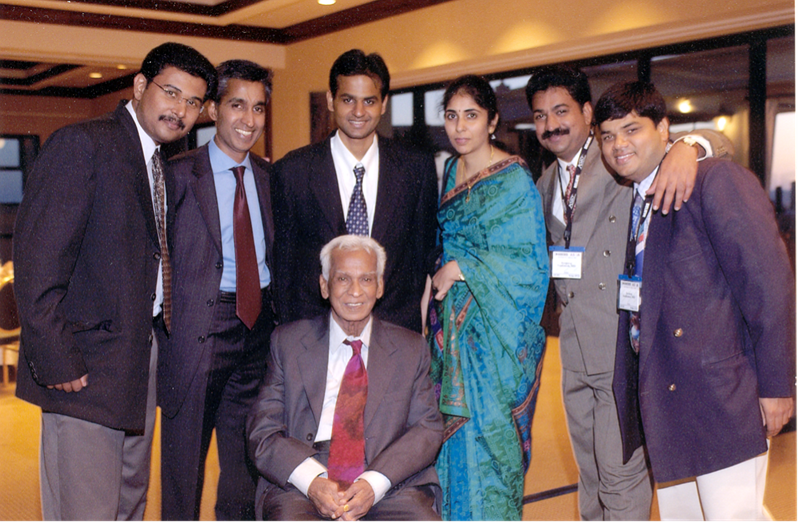
Dr. Haripriya (third from right), Dr. Venkatesh (second from right), and others with Govindappa Venkataswamy, MD (front center), in 2004 when Dr. Venkataswamy was inducted into the ASCRS Ophthalmology Hall of Fame.
Source: Dr. Haripriya and Dr. Venkatesh
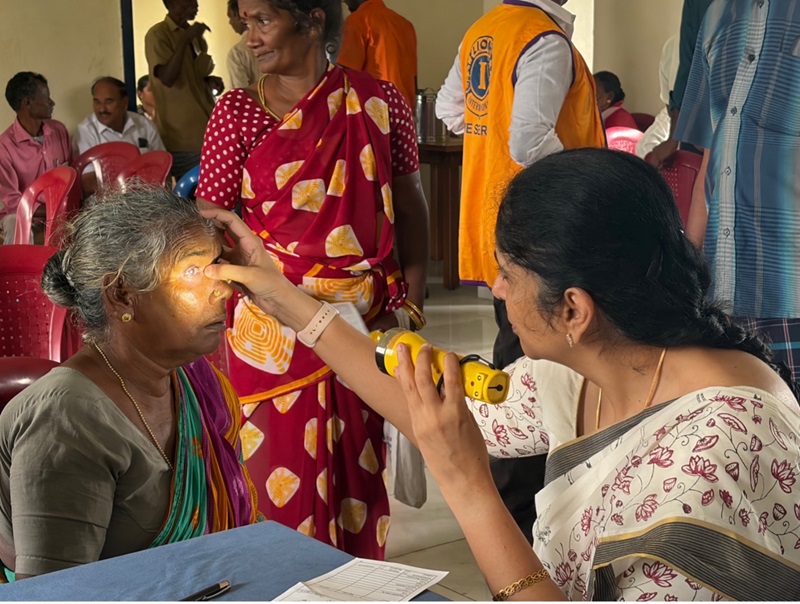
Dr. Haripriya with a patient at a camp at Gummidipoondi, Tamil Nadu, India.
Source: Dr. Haripriya
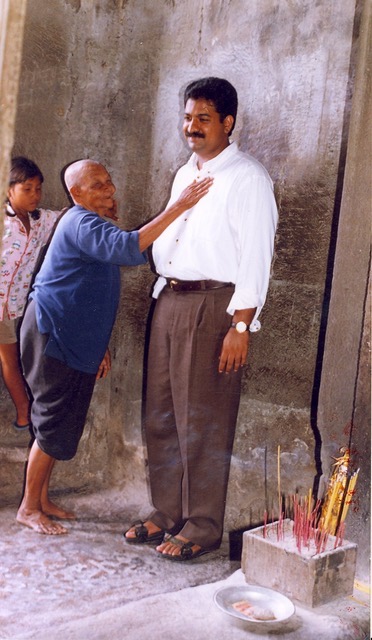
Dr. Venkatesh receives a blessing from a patient in Cambodia whose vision he restored.
Source: Dr. Venkatesh
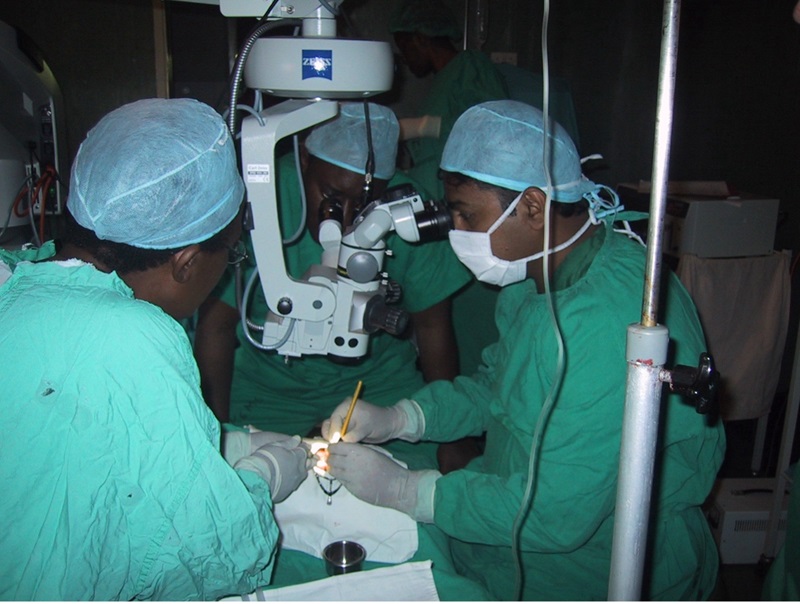
Dr. Venkatesh demonstrates MSICS at Kilimanjaro Christian Medical Centre.
Source: Dr. Venkatesh
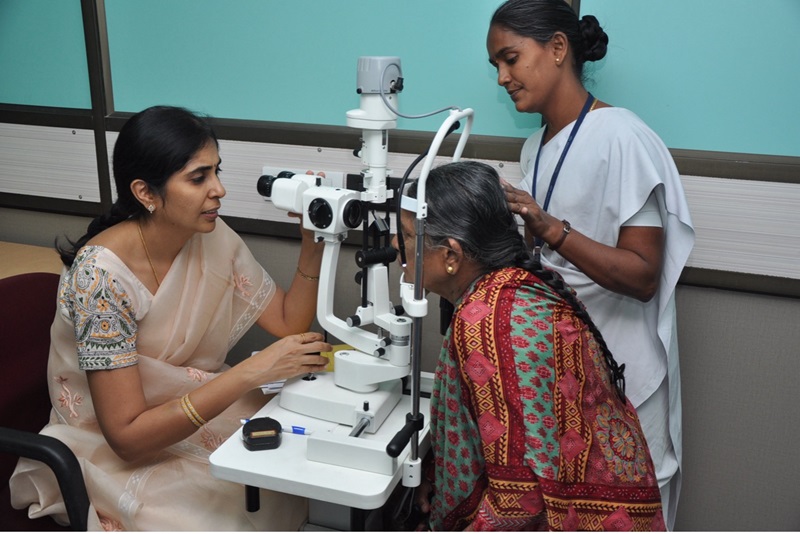
Dr. Haripriya evaluates a patient at Aravind Eye Hospital, Madurai.
Source: Dr. Haripriya
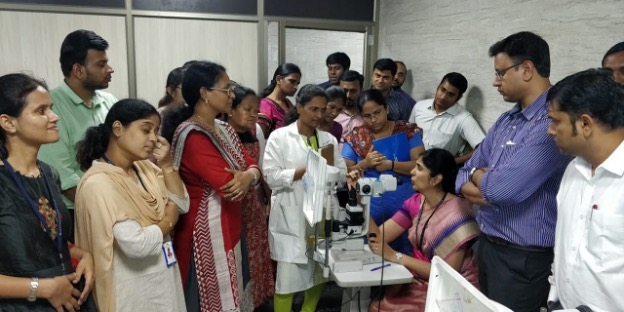
Dr. Haripriya leads a workshop on astigmatism management at Aravind Eye Hospital, Chennai in 2019.
Source: Dr. Haripriya
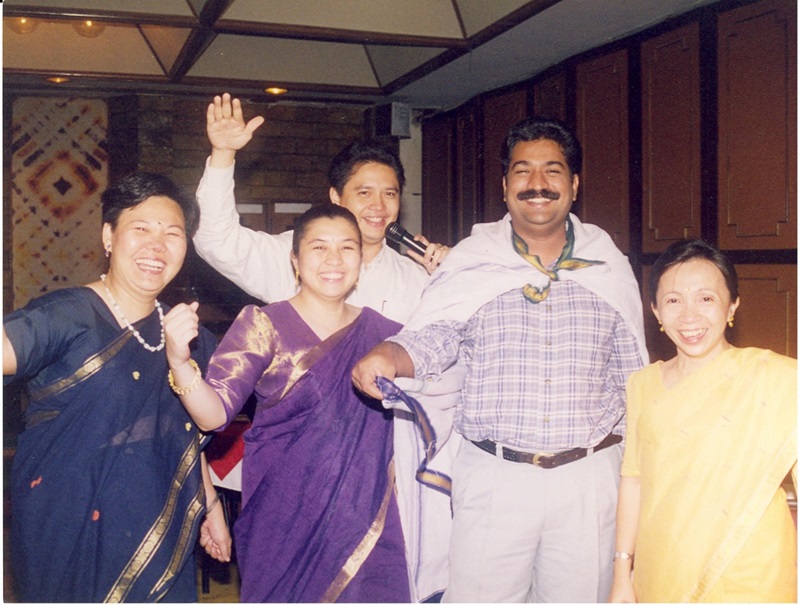
Dr. Venkatesh poses with MSICS trainees from the Philippines, who he said called him “Superman” because of the high volume of MSICS procedures he performed.
Source: Dr. Venkatesh